
Attention-deficit/hyperactivity disorder (ADHD) is not really a disorder. It is a neurodevelopmental condition that affects attention, activity levels, impulse control, organisation, and emotional regulation. Symptoms begin in childhood, but they can continue into adolescence and adulthood. ADHD can affect learning, work, relationships, home life, and self-esteem, but with accurate diagnosis and the right supports, people with ADHD can manage symptoms and thrive.
Core Features of ADHD
- Attention Deficit (Inattention): difficulty sustaining focus, following instructions, completing tasks, organising belongings, managing time, or remembering daily responsibilities. The degree of inattention varies amongst individuals. The inattention may not be present if the individual in engaged in something they are interested in.
- Hyperactivity: restlessness, fidgeting, excessive talking, difficulty sitting still, or feeling constantly “on the go”. Females often do not show hyperactivity as they can mask the symptoms.
- Distractibility: other interesting things often distract them on they way to completing their primary tasks. This affects the ability to keep a task in focus.
- Impulsivity: interrupting others, acting before thinking, difficulty waiting, emotional outbursts, or making quick decisions without considering consequences.
ADHD in Children
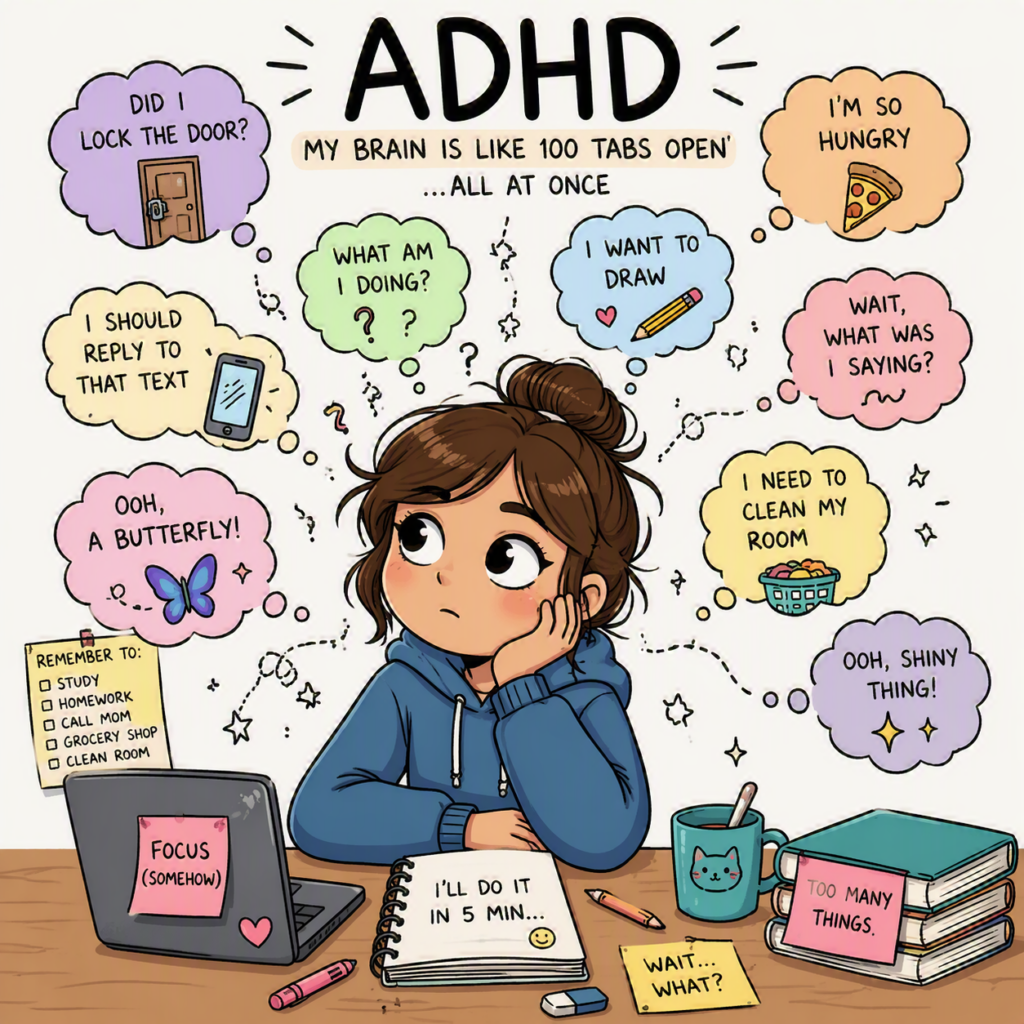
In children, ADHD often becomes noticeable when expectations increase at school or at home. A child may struggle to stay seated, listen carefully, finish schoolwork, follow routines, wait their turn, or control big reactions. Some children are visibly active and impulsive, while others are quieter and mainly inattentive, which can make ADHD easier to miss. These children often get into trouble at school because of the fidgety behaviour, impulsivity or the inability to focus. Often, disorganisation leads to inability to complete assignments, missing datelines and falling behind. These children may be very disorganised both at school or at home. They are often labelled “messy”.
ADHD in Adults
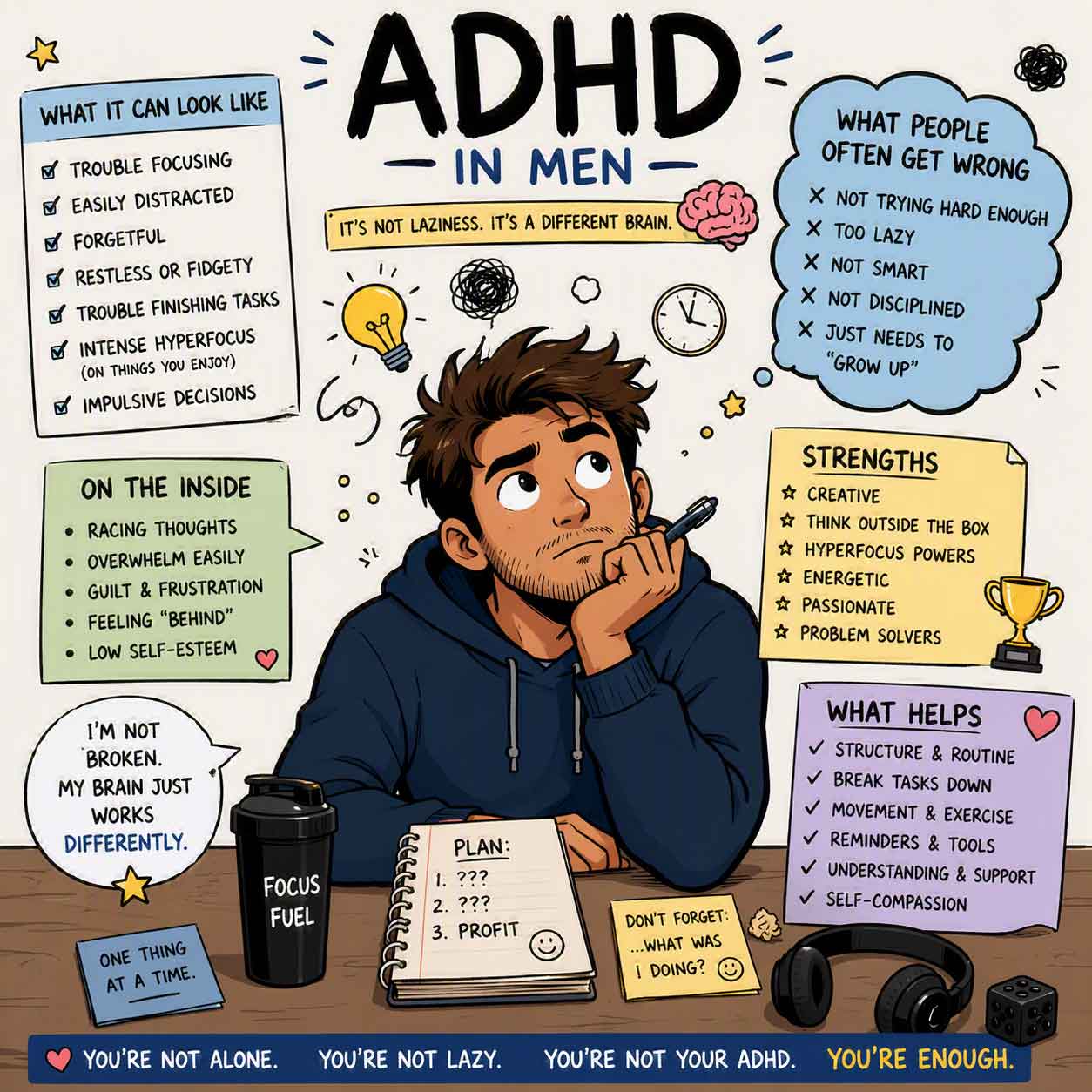
In adults, hyperactivity may look less like running or climbing and more like inner restlessness, impatience, overcommitting, or difficulty relaxing. Adults with ADHD may have trouble prioritising tasks, managing deadlines, keeping track of appointments, regulating emotions, maintaining routines, or staying focused during meetings, conversations, study, or paperwork.
The so-called “Adult-onset ADHD” might have been a child with ADHD but was functional earlier on because they found strategies around the deficit or grew up in a well supported environment or both and was never diagnosed. Later on in life, often, a traumatic event, affected the ability to manage the ADHD elements and they become less functional.
Is ADHD on the rise?
In Australia, the Australian Institute of Health and Welfare reports that the rate of people dispensed ADHD medication under the PBS increased from 2 per 1,000 people in 2004–05 to 22 per 1,000 in 2023–24. It also notes that adult rates have risen strongly, with adult women now having higher dispensing rates than adult men. [aihw.gov.au] but that doesn’t necessarily mean the underlying biological rate of ADHD is rising at the same pace. There are many reasons why the rates are seemingly rising:
- Better awareness and reduced stigma: More adults, especially women, are recognising symptoms that may have been missed in childhood. The Australian Psychological Society says the increase should not automatically be interpreted as a sudden jump in true ADHD prevalence, but partly as a correction for past underdiagnosis. [psychology.org.au]
- Greater adult diagnosis: Adult ADHD has historically been under-recognised, so more people are now being assessed later in life. [psychology.org.au], [aihw.gov.au]
- Increasing societal stress load
Previously undiagnosed but functioning ADHD adults can buckle under the increase in stress load in our society – cost living, less time to unwind, increasing “productivity” pressure at work, pressure to climb the career ladder. They are now no longer functional.
- Access and prescribing changes: Medication dispensing has increased substantially, and some experts are concerned about inconsistent assessment quality, overdiagnosis, and inequitable access to thorough evaluation. [pmc.ncbi.nlm.nih.gov], [abc.net.au]